

More companies are leveraging Autonomous Mobile Robots (AMRs) to take on the repetitive task of labor-intensive material transport, but they’re still far from the norm. As adoption grows, there’s one thing worth planning for early, especially if you’ll be using more than one AMR brand.
There’s an AMR for Almost Every Task
AMRs can be incredibly resourceful investments in a variety of ways. Some manufacturers offer open platforms you can customize for a specific task. For example, pair an AMR with a robotic arm and vision/AI, and you get a machine-tending system that drives to a machine, docks, and inspects or replaces tooling or products.
Other AMR manufacturers offer a deep lineup of units that move pallets of raw materials or transport and dispense totes into cleanrooms, using lifters, conveyor tops, and other attachments called “topper-hats” or “toppers.” Some AMR manufacturers even focus only on floor cleaning.
Where Mixed-Brand AMR Fleets Get Complicated
Because AMRs are still new to many organizations, most don’t have past projects to learn from, especially when it comes to how different robots share the same floor.
Here’s a common scenario:
- A company uses one AMR brand to move pallets of raw materials to production.

- A smaller model from the same brand carries totes on a conveyor topper and drops them into a cleanroom.
- Happy with the results, the company invests in a floor-cleaning AMR from a different manufacturer
Now the question is: how will these mixed fleets work together? It gets even more complex if that second brand is an AMR walkie-stacker or counterbalance truck instead of a cleaner. These systems must communicate with one another.
Why Different AMR Brands Don’t “See” Each Other
Most AMR manufacturers offer fleet management software which shows the user granular insight into the robot locations, mission data, and more. The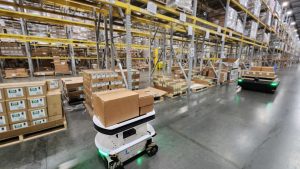 catch is that these dashboards can’t see robots from other brands.
Two AMRs on the same floor shouldn’t collide, but they can get stuck in a standoff. Each one uses its cameras and scanners to steer around the other, and both keep adjusting in an endless “dance-off” where neither moves forward efficiently.
The Fix: A Single Software Layer for Every Robot
The good news is there are solutions. Some brands are simply better at certain tasks, so using more than one often makes sense.
Third-party software providers now offer a layer that sits above all your AMRs, so you get visibility into every robot and mission from one place. Different brands can then “see” each other and plan routes around one another, letting each fleet run at full potential.
Plan for a Smoother Rollout
Running a mixed-brand AMR fleet is very doable and shouldn’t be intimidating. It just takes some extra planning and investment up front to keep everything working together smoothly.
Considering adding a second AMR brand? Talk with our automation team about how to plan for a mixed fleet that works together from day one.

About the Author: Chris Rose
As an Automated Solutions Sales Engineer, Chris Rose works with our clients and integrated partners to provide warehousing and manufacturing automation solutions to increase productivity and operational efficiencies.
Recent Posts
November 16, 2026
November 2, 2026
October 19, 2026
September 22, 2026
Stay Updated!
Join our mailing list to receive blog posts from Abel Womack.
